
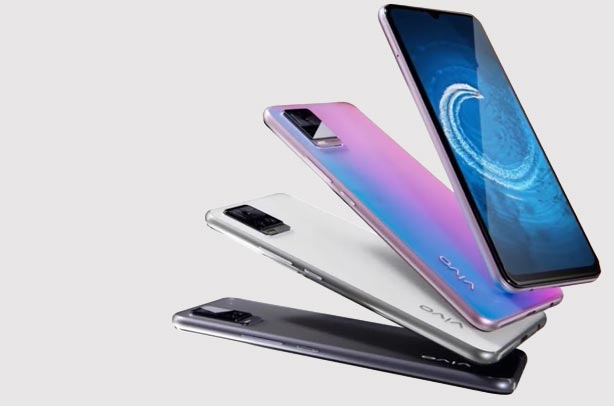


Brand Overview
- Live the Joy
- Go Into The Wild
- Make In India
Market Entry and Context
Vivo entered India in 2014, at a time when:
- Smartphone adoption was accelerating rapidly
- Feature phones were giving way to affordable Android devices
- Samsung dominated, Micromax was peaking, and Chinese brands were just beginning to enter
The market was:
- Highly price-sensitive
- Heavily influenced by offline retail
- Open to experimentation, but trust-deficit existed for new Chinese brands
Vivo entered quietly but decisively, betting early on distribution depth and marketing visibility rather than online-only disruption.
Marketing Mix (4Ps)
 Product Strategy
Vivo’s product strategy in India focused on perceived innovation at affordable prices:
- Strong emphasis on camera performance, especially selfies
- Slim designs, AMOLED displays, fast charging
- Regular refresh cycles with visible spec upgrades
Key pillars:
- Clear segmentation (Y-series for mass, V-series for aspirational mid-premium)
- India-first feature tweaks (camera tuning, language support)
- Rapid feedback loop from retail to product teams
Vivo rarely chased flagship leadership; instead, it focused on value-led differentiation
 Pricing Strategy
Vivo followed a mid-range mass-premium pricing strategy:
- Core focus on ₹10,000–₹25,000 segments
- Higher margins built in to support retailer commissions
- EMIs and festive offers used to improve affordability
Unlike Xiaomi’s razor-thin margins, Vivo priced for sustainable channel incentives, which proved critical in offline markets.
 Promotion Strategy
Promotion was Vivo’s biggest competitive weapon:
- Celebrity endorsements (film stars, youth icons)
- Heavy ATL spend (TV, outdoor, cinema)
- Title sponsorship of IPL (2016–2019)—a turning point in national visibility
- Strong retail branding: shop boards, hoardings, point-of-sale dominance
Vivo’s marketing focused on aspiration, entertainment, and youth, not technology jargon.
 Distribution Strategy
Vivo built one of India’s strongest offline distribution networks:
- Early and aggressive focus on multi-brand retail
- High retailer margins and incentive schemes
- Extensive presence in Tier 2, 3, and semi-urban markets
- Dedicated service centres to build trust
This “feet-on-street” strategy helped Vivo scale faster than online-first rivals in non-metro India.
Challenges and Response
| Challenge | Response |
| Trust issues around Chinese brands | Service expansion, branding, celebrity endorsement |
| Regulatory scrutiny | Increased localisation and compliance |
| Overlap with sister brands | Clearer segmentation and pricing discipline |
| Online competition pressure | Strengthened offline-first strategy |
| Premium perception gap | Gradual move upmarket with V-series |
Vivo prioritised stability and continuity over aggressive pivots.
Competitive Landscape
Vivo operates in one of the world’s most competitive smartphone markets:
- Samsung: brand legacy and breadth
- Xiaomi: online-first, value-led
- Oppo/Realme: sibling brands with overlapping segments
- Apple: premium aspirational benchmark
Vivo differentiated through:
- Offline dominance
- Aggressive marketing
- Camera-led positioning
Related Case Studies
Innovations & Adaptation
While not always first globally, Vivo adapted innovations smartly for India:
- In-display fingerprint sensors
- Fast charging adoption
- Camera features optimised for Indian skin tones and usage patterns
- Local manufacturing under “Make in India”
Vivo also adjusted product mix quickly in response to changing demand and competition.
Consumer Perception & Cultural Connect
In India, Vivo is perceived as:
- Stylish and youth-oriented
- Good camera phones for social sharing
- Easily available and serviceable
Culturally:
- Strong connect with cricket and Bollywood
- Popular among first-time smartphone buyers and upgraders
- Less “tech-elite”, more mass-aspirational
Vivo became a familiar, visible brand rather than an aspirational cult brand.
Impact and Legacy
Vivo’s impact on India’s smartphone market includes:
- Proving the power of offline-led scale
- Normalising heavy marketing spend in smartphones
- Raising competition in mid-range design and camera quality
- Expanding smartphone access beyond metros
It helped shift smartphone growth from cities to Bharat.
Key Learnings
- Offline distribution can outperform online disruption in India
- Retail incentives matter as much as product specs
- Mass marketing still works at scale
- Visible innovation beats abstract superiority
- Trust-building is essential for new foreign brands
Summary
Vivo's journey in India is a case study in execution over evangelism. By understanding India’s retail realities, investing heavily in visibility, and delivering feature-rich phones at accessible prices, Vivo carved out a dominant position in a brutal market. Its success shows that in India, scale is built not just through technology—but through distribution, perception, and persistence.