
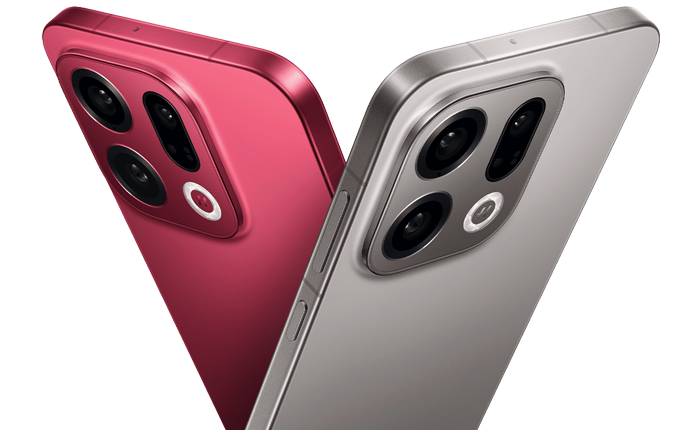


Brand Overview
- Make Your Moment
- Inspiration Ahead
- Come fall in love with technology
Market Entry and Context
Oppo entered India in 2014, when:
- Smartphones were transitioning from early adoption to mass adoption
- Samsung dominated, Micromax was declining, and Xiaomi was gaining online traction
- Offline retail was still the primary purchase channel
Indian consumers were:
- Highly price-sensitive
- Increasingly influenced by design, camera quality, and brand visibility
- Open to new brands, provided trust and service were assured
Oppo entered with a clear belief: India would be won offline, not online.
Marketing Mix (4Ps)
 Product Strategy
Oppo's product strategy revolved around camera leadership and industrial design:
- Strong focus on selfie and portrait photography
- Slim, premium-looking devices even in mid-range segments
- Gradual movement from mass-premium to higher-value segments
Key product pillars:
- F-Series ("Selfie Expert") for aspirational youth
- A-Series for mass-market volumes
- Reno series for premium-leaning users
Oppo focused less on raw specifications and more on experience-led differentiation.
 Pricing Strategy
Oppo adopted a value-plus pricing strategy:
- Priced higher than Xiaomi but below Samsung flagships
- Built-in margins to support retailers and marketing
- EMI options and festive offers to soften affordability barriers
This pricing allowed Oppo to:
- Fund heavy advertising
- Incentivise offline retailers
- Maintain brand perception as "premium but attainable"
 Promotion Strategy
Promotion was central to Oppo's India strategy:
- Heavy ATL advertising (TV, outdoor, cinema)
- Celebrity endorsements (Bollywood actors)
- High-visibility sponsorships (cricket teams, tournaments)
- Massive in-store branding and point-of-sale dominance
Oppo's messaging focused on:
- Self-expression
- Style and youth aspiration
- Camera superiority rather than tech specs
 Distribution Strategy
Oppo built one of India's most extensive offline distribution networks:
- Deep penetration into multi-brand retail outlets
- High retailer margins and incentive schemes
- Strong service centre network across small towns
- Early focus on Tier 2 and Tier 3 markets
Oppo's distribution muscle often outweighed competitors' online advantages.
Challenges and Response
| Challenge | Response |
| Overlap with Vivo/Realme | Sharper product and pricing segmentation |
| Price competition from Xiaomi | Focus on brand, not price wars |
| Trust deficit for Chinese brands | Service expansion and celebrity endorsements |
| Regulatory and geopolitical pressure | Increased localisation and compliance |
| Rising online influence | Selective online presence without abandoning offline |
Oppo chose consistency over reinvention.
Competitive Landscape
Oppo faced competition from:
- Samsung (brand trust and range)
- Xiaomi (price-value equation)
- Vivo (sibling brand with similar offline strength)
- Realme (value disruptor)
To differentiate, Oppo emphasised:
- Camera and design
- Premium brand imagery
- Offline dominance
Related Case Studies
Innovations & Adaptation
Oppo was known for visible, consumer-facing innovation:
- Pop-up and rotating cameras
- Fast charging (VOOC)
- AI camera features optimised for selfies
- Rapid product refresh cycles
In India, Oppo also adapted by:
- Local manufacturing
- Expanding R&D for camera optimisation
- Adjusting product mix based on retail feedback
Consumer Perception & Cultural Connect
Oppo is perceived in India as:
- Stylish and camera-focused
- Aspirational yet approachable
- Easily available and serviceable
Culturally:
- Connected with Bollywood and cricket
- Popular among young professionals and first-time upgraders
- Less tech-centric, more lifestyle-oriented
Oppo phones became fashion accessories as much as devices.
Impact and Legacy
Oppo's impact includes:
- Normalising heavy brand-building in smartphones
- Strengthening offline retail economics
- Pushing camera innovation into mid-range segments
- Expanding smartphone adoption beyond metros
Oppo helped reshape how smartphones are marketed in India.
Key Learnings
- Offline retail remains powerful in India
- Brand-building can justify premium pricing
- Visible innovation matters more than spec sheets
- Retailer relationships are strategic assets
- Consistency beats constant repositioning
Summary
Oppo’s journey in India demonstrates that scale in India is built through distribution, visibility, and aspiration. By focusing on offline dominance, camera-led differentiation, and sustained brand investment, Oppo carved out a significant presence in one of the world’s most competitive smartphone markets. Its success reinforces a core India lesson: in mass markets, perception and presence are as critical as product performance.