
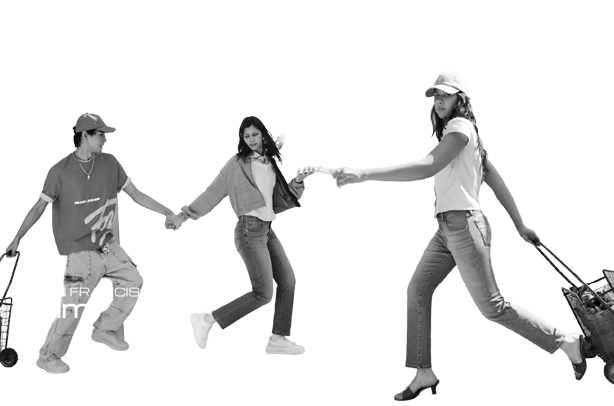


Brand Overview
- Always Stylish. Always Affordable
- Fashion at Star Prices
- Branded styles at street prices
Market Entry and Context
Zudio entered the market in the mid-to-late 2010s, a period marked by:
- Rising fashion consciousness beyond metros
- Growth of mall culture in Tier 2 and Tier 3 cities
- Price-sensitive consumers aspiring for “Instagrammable” fashion
- Fast fashion dominated by Westside, H&M, and online-first players
A large gap existed between:
- Unorganised street fashion (cheap but inconsistent)
- Organised fast fashion (stylish but expensive)
Zudio positioned itself squarely in this gap.
Marketing Mix (4Ps)
 Product Strategy
Zudio’s product strategy is built around rapid trend replication and limited SKUs.
Key elements:
- Trend-inspired apparel across men, women, and kids
- Footwear, accessories, and beauty add-ons
- Extremely tight product lifecycle (often weeks, not seasons)
- Limited depth per design to avoid overstocking
Rather than building hero products, Zudio focuses on:
- High churn of styles
- “What’s new today?” excitement
- Encouraging impulse purchases
Fashion freshness, not durability, is the core proposition.
 Pricing Strategy
Pricing is Zudio’s most powerful differentiator.
Characteristics:
- Most apparel priced under ₹999
- Many products clustered in ₹299–₹799 bands
- Transparent, flat pricing (no complex discounts)
This EDLP (Everyday Low Pricing) approach:
- Removes decision fatigue
- Reduces reliance on sales
- Trains consumers to buy immediately, not wait
Zudio makes fashion feel disposable but delightful.
 Promotion Strategy
Zudio’s promotion strategy is deliberately minimalist.
Key traits:
- Almost no mass-media advertising
- Limited celebrity endorsements
- Sparse digital presence compared to peers
Instead, Zudio relies on:
- Store visibility and location
- Word-of-mouth and social media haul culture
- Curiosity-driven walk-ins
- Strong in-mall branding
The brand lets price + product discovery do the talking.
 Distribution Strategy
Zudio is a physical-retail-first brand, unusual in a digital-heavy era.
Distribution highlights:
- Large-format standalone or mall-based stores
- Aggressive expansion into Tier 2 and Tier 3 cities
- High inventory turns enabled by local demand signals
- Minimal dependence on e-commerce
Store economics are central:
- High footfall
- Fast checkout
- Low-cost interiors
- Simple merchandising
Zudio treats stores as fashion warehouses, not lifestyle destinations.
Challenges and Response
| Challenge | Response | ||
| Thin margins due to low pricing | Risk of overexposure and sameness | Limited brand aspiration ceiling | Environmental and sustainability criticism |
| Scale-led profitability | Continuous SKU refresh to avoid fatigue | Portfolio balance via Trent’s other brands (Westside, Star) | Gradual backend efficiency improvements |
Zudio consciously chooses volume over margin elegance.
Competitive Landscape
Zudio competes across multiple fronts:
- Value fashion chains: Reliance Trends (lower end), Pantaloons
- Global fast fashion: H&M (but far more expensive)
- Unorganised retail: street markets, local stores
- Online fast fashion: Myntra private labels, Meesho sellers
Zudio’s edge lies in price-speed-scale, not brand aspiration.
Related Case Studies
Innovations & Adaptation
Zudio’s innovation is operational, not aesthetic.
Key innovations:
- Ultra-short design-to-shelf cycles
- Data-driven regional assortment planning
- Tight supplier integration
- Low markdown dependency
The brand has adapted quickly to:
- Casualisation of fashion
- Post-pandemic value-seeking behaviour
- Youth-driven trend velocity
Zudio proves that supply chain speed can be a brand asset.
Consumer Perception & Cultural Connect
Zudio is perceived as:
- Affordable
- Trendy
- Non-intimidating
- “Value-for-money fashion, no guilt”
Culturally, Zudio taps into:
- Democratisation of fashion
- Youth experimentation without commitment
- Tier 2/3 India’s rising confidence
- Social media-driven outfit churn
Zudio normalised the idea that looking fashionable doesn’t require saving up.
Impact and Legacy
Zudio has:
- Reset price expectations in organised fashion retail
- Forced competitors to sharpen value propositions
- Proven that offline retail can still scale rapidly
- Created one of India’s fastest store expansion stories
It is one of the clearest examples of Tata Group’s quiet but ruthless retail execution.
Key Learnings
- Price clarity can be more powerful than brand storytelling
- Physical retail still wins when footfall economics work
- Speed beats depth in mass fast fashion
- Tier 2/3 India can scale national brands
- Promotion is optional when the value proposition is extreme
Summary
Zudio’s journey in India is a case study in strategic restraint and operational aggression. By stripping fashion retail down to its essentials—trend, price, speed, and access—it built a massive, profitable business without hype, celebrities, or heavy advertising.
Zudio shows that in India, value is not the opposite of fashion—it is its biggest accelerator.